- Project title: Engaging approaches and services for meaningful climate actions (ClearClimate)
- Project number: 101131220
- Institutions participating in the project: https://clear-climate.com/partners/
- Status in the project: Coordinator
- Project leader: Biljana Basarin (Department of Geography, Tourism and Hotel Management)
- Project type: HORIZON-MSCA-2022-SE-01-01 – MSCA Staff Exchanges 2022
- Period of realization: 1.11.2023-31.10.2027
- Project website: https://clear-climate.com
You are browsing archives for
Author: PMF
Seed Priming Solutions: Boosting Crop Resilience for a Sustainable Future (PrimSeedPower)
- Project title: Seed Priming Solutions: Boosting Crop Resilience for a Sustainable Future (PrimSeedPower)
- Project number: CA24156
- Institutions participating in the project: https://www.cost.eu/actions/CA24156/#tabs+Name:Main%20Contacts%20and%20Leadership
- Status in the project: Partner (Department of Chemistry, Biochemistry and Environmental Protection: Anita Leovac Maćerak)
- Project leader: Dr Erna Karalija, Action Chair (University of Sarajevo)
- Project type: COST Action (part of Horizon Europe Programme)
- Period of realization: 19.05.2025-14.10.2029
- Project website: https://www.cost.eu/actions/CA24156/#tabs+Name:Description
Reframing the Social Impact of Design (ReSIDe)
- Project title: Reframing the Social Impact of Design (ReSIDe)
- Project number: CA25154
- Institutions participating in the project: https://www.cost.eu/actions/CA25154/#tabs+Name:Main%20Contacts%20and%20Leadership
- Status in the project: Partner (Department of Geography, Tourism and Hotel Management: Kristina Košić)
- Project leader: Dr Harun Kaygan, Main Proposer (University of Southern Denmark)
- Project type: COST Action (part of Horizon Europe Programme)
- Period of realization: 26.10.2026-25.10.2030
- Project website: https://www.cost.eu/actions/CA25154/#tabs+Name:Description
EDGE: Edges of Democracy, Geography & Environment (EDGE)
- Project title: EDGE: Edges of Democracy, Geography & Environment (EDGE)
- Project number: CA25134
- Institutions participating in the project: https://www.cost.eu/actions/CA25134/#tabs+Name:Main%20Contacts%20and%20Leadership
- Status in the project: Partner (Department of Geography, Tourism and Hotel Management: Kristina Košić)
- Project leader: Dr Samuel Everett, Main Proposer (University of Southampton)
- Project type: COST Action (part of Horizon Europe Programme)
- Period of realization: 30.10.2026-29.10.2030
- Project website: https://www.cost.eu/actions/CA25134/#tabs+Name:Description
European Network for Developing and Evaluating the Use of GenAI in Education (ENDUeAI)
- Project title: European Network for Developing and Evaluating the Use of GenAI in Education (ENDUeAI)
- Project number: CA25177
- Institutions participating in the project: https://www.cost.eu/actions/CA25177/#tabs+Name:Main%20Contacts%20and%20Leadership
- Status in the project: Partner (Department of Geography, Tourism and Hotel Management: Kristina Košić)
- Project leader: Dr Jianhua Yang, Main Proposer (University of Warwick)
- Project type: COST Action (part of Horizon Europe Programme)
- Period of realization: 05.10.2026-04.10.2030
- Project website: https://www.cost.eu/actions/CA25177/#tabs+Name:Description
Perspectives on Higher Education Student Populations in Cities (PHESPiC)
- Project title: Perspectives on Higher Education Student Populations in Cities (PHESPiC)
- Project number: CA25103
- Institutions participating in the project: https://www.cost.eu/actions/CA25103/#tabs+Name:Main%20Contacts%20and%20Leadership
- Status in the project: Partner (Department of Geography, Tourism and Hotel Management: Kristina Košić)
- Project leader: Dr Jose Prada Trigo, Main Proposer (University of Valladolid)
- Project type: COST Action (part of Horizon Europe Programme)
- Period of realization: 22.09.2026-21.09.2030
- Project website: https://www.cost.eu/actions/CA25103/#tabs+Name:Description
Terra Atomica: Exploring the Afterlives of Nuclear Landscapes in Europe (TerraAtomica)
- Project title: Terra Atomica: Exploring the Afterlives of Nuclear Landscapes in Europe (TerraAtomica)
- Project number: CA25116
- Institutions participating in the project: https://www.cost.eu/actions/CA25116/#tabs+Name:Main%20Contacts%20and%20Leadership
- Status in the project: Partner (Department of Geography, Tourism and Hotel Management: Uglješa Stankov)
- Project leader: Dr Jovana Janinović, Main Proposer (University of Montenegro)
- Project type: COST Action (part of Horizon Europe Programme)
- Period of realization: 19.05.2025-14.10.2029
- Project website: https://www.cost.eu/actions/CA25116/#tabs+Name:Description
TECHnological Transformation Of the Built Environment. Understanding Digital Innovations (Tech-TO.BE)
- Project title: TECHnological Transformation Of the Built Environment. Understanding Digital Innovations (Tech-TO.BE)
- Project number: CA25158
- Institutions participating in the project: https://www.cost.eu/actions/CA25158/#tabs+Name:Main%20Contacts%20and%20Leadership
- Status in the project: Partner (Department of Geography, Tourism and Hotel Management: Uglješa Stankov)
- Project leader: Dr Chiara Tagliaro, Main Proposer
- Project type: COST Action (part of Horizon Europe Programme)
- Period of realization: 19.05.2025-14.10.2029
- Project website: https://www.cost.eu/actions/CA25158/#tabs+Name:Description
EINSTEIN Project International Conference: From Local Excellence to Global Impact
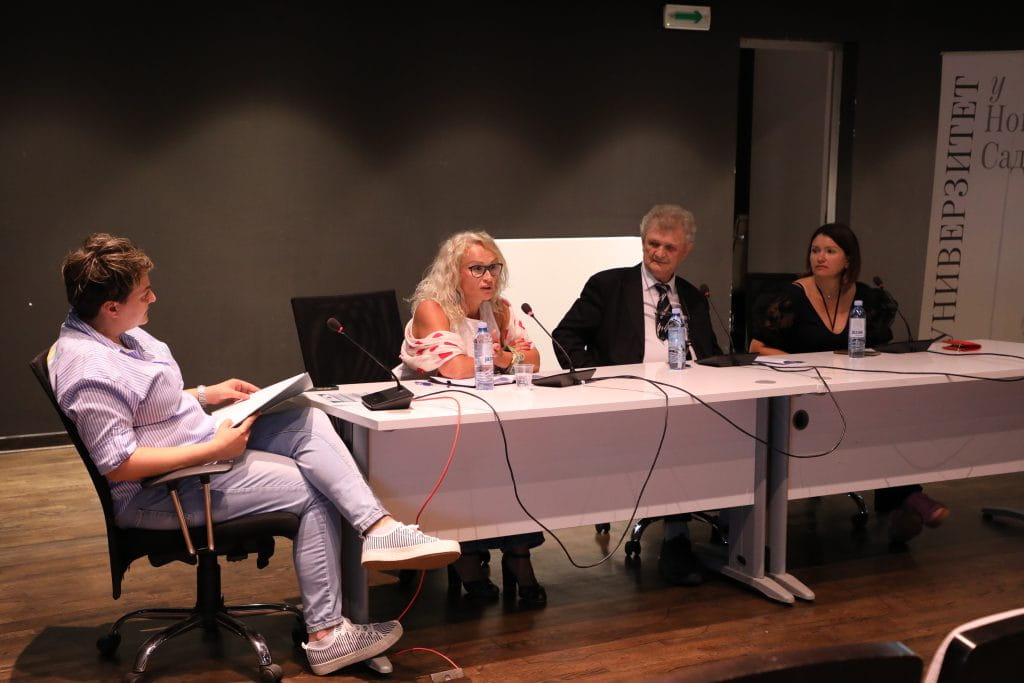
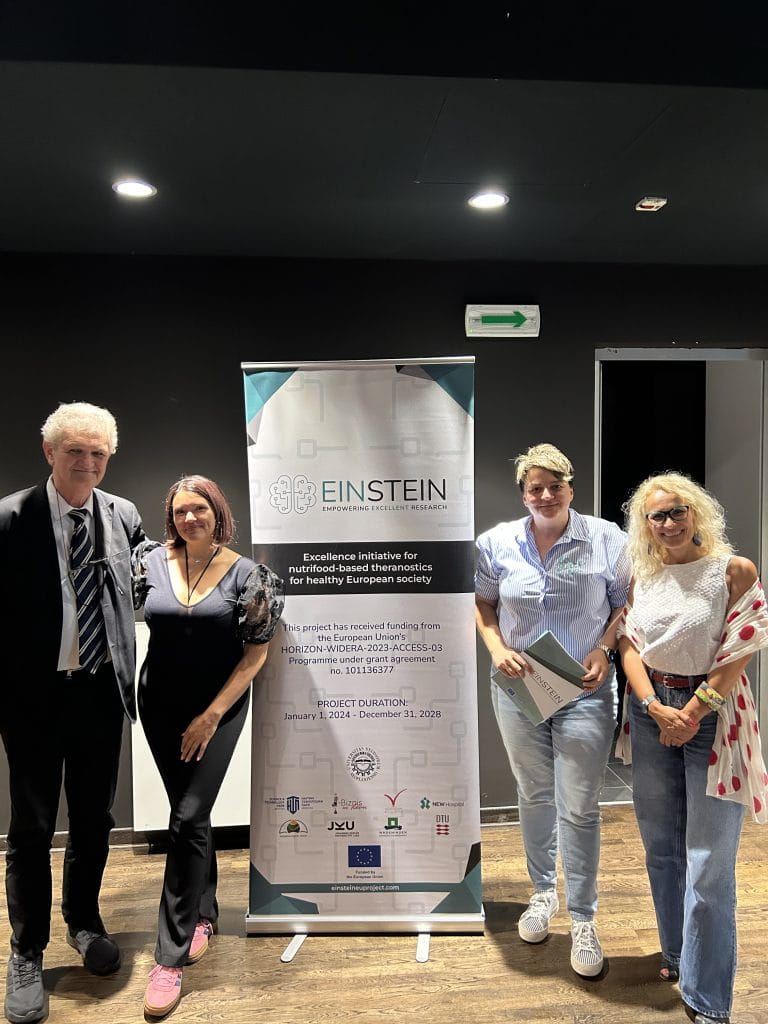
Gordana Vlahović, Head of International and Project Office at the Faculty of Sciences, University of Novi Sad, participated as a panelist in the EINSTEIN Project international conference “From Local Excellence to Global Impact: Importance of Internationalization for Reaching Research and Innovation Excellence”, held on 5 June 2026 at the University of Novi Sad. The conference brought together distinguished experts, university leaders, researchers, project managers, and internationalization professionals from across Europe to discuss the evolving role of internationalization in advancing higher education institutions, research excellence, innovation capacity, and global competitiveness.
As a participant in the round table discussion “The Importance of Internationalization and Alumni Cooperation for the Progress of Higher Education Institutions”, Gordana Vlahović shared insights gained through years of experience in supporting international research collaboration, Horizon Europe participation, researcher mobility, institutional capacity building, and strategic partnership development. She emphasized that internationalization should not be seen as a collection of projects, mobility schemes, or bilateral agreements, but as a comprehensive institutional transformation process. Referring to internationally recognized concepts of Comprehensive Internationalization, she highlighted the importance of embedding international and intercultural dimensions into all core missions of the university – research, education, innovation, governance, and societal engagement. Sustainable internationalization is achieved when international cooperation becomes an integral part of institutional culture and strategic development. Strong international partnerships create a multiplier effect by generating research opportunities, attracting talent, increasing visibility, fostering innovation, and contributing to long-term institutional resilience and excellence.
Faculty of Sciences is commitment to strengthening international collaboration and expanding its role within the European and global research and education ecosystems. International and Project Office actively supports researchers, students, and academic staff in accessing international opportunities, building strategic partnerships, and enhancing participation in competitive European programmes. Gordana Vlahović highlighted the Faculty of Sciences’ commitment to transforming international cooperation into tangible institutional impact strengthening research excellence, advancing educational quality, fostering innovation, and preparing the next generation of globally connected scientists and professionals.
The conference provided an opportunity to exchange experiences with representatives of leading European universities and organizations, reaffirming the importance of collaboration, knowledge exchange, and international networking as key drivers of research and innovation excellence.
10th Joint International PSU–UNS Bioscience Conference (IBSC2026)
University of Novi Sad Faculty of Sciences, Faculty of Agriculture, Institute of Food Technology Novi Sad (FINS), and BioSense Institute have the pleasure to invite you to the 10th Joint International PSU–UNS Bioscience Conference (IBSC2026), which will take place at the University of Novi Sad, BioSense Institute, Serbia, from 28-29 September 2026.
Under the conference tagline “Bio4Future – Life Sciences for a Sustainable and Smart Future” the international academic community is invited to present research findings within the following tracks:
- Track 1: Life Science Frontiers: Systems Biology, Biodiversity, and Environmental Resilience
- Track 2: Changing Seasonality in the Era of Climate Change: Biological Timing, Phenology, and Ecosystem Responses
- Track 3: Bioactive Natural Products, Food, and Biomedicine
- Track 4: AI-Powered Bioscience, Biosensing Technology, and Data Science
IBSC2026 is jointly organized with the University Prince of Songkla – Faculty of Science (PSU) from Thailand and represents the legacy of a long-standing partnership between UNS and PSU and impactful platform for international collaboration among science, academia, industry, and stakeholders from diverse disciplines.
The First Call for Abstract is now open and we invite you to register and submit your abstracts via the conference official website.
We warmly invite you to participate as a speaker or delegate and contribute to the success of this event.
For any additional information, please do not hesitate to write to ibsc2026@pmf.uns.ac.rs.