
- Journal title: Biologia Serbica
- ISSN: 2334-6590
- Publisher: Faculty of Sciences, Department of Biology and Ecology
- Editor-in-chief: Dr Milica Matavulj
- Frequency: Biannual
- Scientific field: Biology
- Journal category: M51
- Web address: ojs.pmf.uns.ac.rs/index.php/dbe_serbica/index
- E-mail: biologia.serbica@dbe.uns.ac.rs
You are browsing archives for
Author: PMF
G-BiKE: European network of scientists for integrating genomic information into ecosystem management
A project with an interesting acronym – G-BiKE, COST Action Genomic Blodiversity Knowledge for Resilient, is a newly funded project of the European Union with the aim to connect scientists, managers and users of natural wealth across Europe in order to emphasize the importance of applying scientific knowledge of genetics and genomics in the conservation of plant and animal life.
Although today genetic information can be obtained for most of the organisms, standardisation of the protocols for detecting and monitoring species’ genetic diversity and their adaptive potential is still missing. The main idea of the G-BiKE project is to establish the usage of genomic knowledge as a standard tool in the environmental protection programmes, in order to ensure the persistence of populations and species.
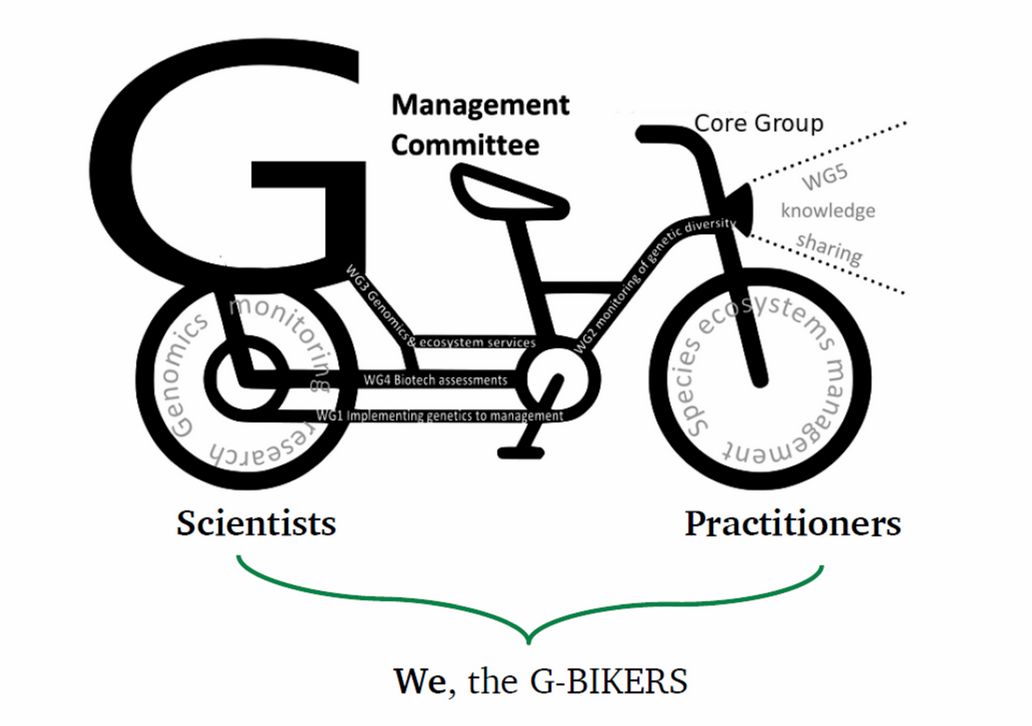 As the acronym of the project alludes to a bicycle, the main idea of the project is to connect two wheels, one symbolising scientists and the other all the practitioners directly involved in the application of ecosystem protection programmes. The project started with a meeting in Brussels attended by 45 scientists from 27 European countries. Serbia was represented by three scientists: Prof Dr Mihajla Djan, full professor at the Faculty of Sciences in Novi Sad, Dr Nevena Velickovic, assistant professor at the Faculty of Sciences in Novi Sad and Dr Srdjan Stojnic, research associate at the Institute of Lowland Forestry and the Environment in Novi Sad.
Scientific programme of the Action is divided in five thematic units which are organized as working groups. The team from Serbia will participate in the working group focusing on the implementation of genetic markers as indicators for monitoring the state of natural populations. The work of this group will result in a unique database including the species of the European continent which are crucial for the development of genetic and genomic markers and the list of areas of special importance for the implementation of environmental protection measures (the areas which are prone to fast changes or which represent cross-border areas of species distribution).
Dr Cristiano Vernesi from Italy was appointed as the Action Chair, and during the first meeting other leaders were appointed, including a representative from Serbia – dr Nevena Velickovic who was appointed as the Science Communication Manager.
Note:
The project was obtained within the COST programme. COST is an intergovernmental framework for European cooperation in the domain of science and technology which opens space for the projects, which have already been financed at the national level and involve at least five institutions from the programme member countries, to be coordinated at the European level. COST programme financially supports the collaboration activities such as organising conferences, seminars, working group meetings, meetings of the executive boards of individual projects within the programme, participation in summer schools, as well as travel expenses for short-term scientific visits.
Positive experiences of the visiting student at the Master Studies of Applied Mathematics
It is our great pleasure that visiting students, such as Greta, can bring home great impressions about the exchange programmes at our Faculty.
My name is Greta Malaspina, I come from Italy and last year I got the opportunity to spend three months at the Department of Mathematics and Informatics of the University of Novi Sad.
During the second year of my Master program in mathematics at the University of Florence, I decided that I would have liked to go abroad for the traineeship period required by my study program, and my advisor of the time informed me of the international agreement between our department and the University of Novi Sad and suggested me to spend a few months at UNS.
Novi Sad is a beautiful and welcoming city, made lively and young by the huge number of students that every year attend its university, and there I found everything that I could have hoped from an exchange program.
At the DMI I worked at my first research-related task, together with passionate professors who introduced me to the problem and guided me through the whole process of developing, studying and testing new ideas. The collaboration continued when I came back to my university and my work at UNS about subsampled spectral methods for unconstrained optimization became the topic of my master thesis.
During my time there I also got the opportunity to participate to some of the many activities organized by the department and to take part into some of the courses from the Data Science study program. Participating to the weekly seminars and the classes, I’ve been introduced to several new topics which gave me the chance to enlarge my perspective over my interests and to greatly increase my knowledge, not only about my specifical field. These activities also allowed me to meet a number of local students, and getting to know their different backgrounds made me develop a new point of view on all the things that I had been studying in the previous years.
I have always been convinced that working in different environments and with different people is of a great importance for the development of a student, and I think that the University of Novi Sad has been for me an ideal place where to have such an experience.
The team of the Faculty of Sciences won the second award for the best business idea in the food sector
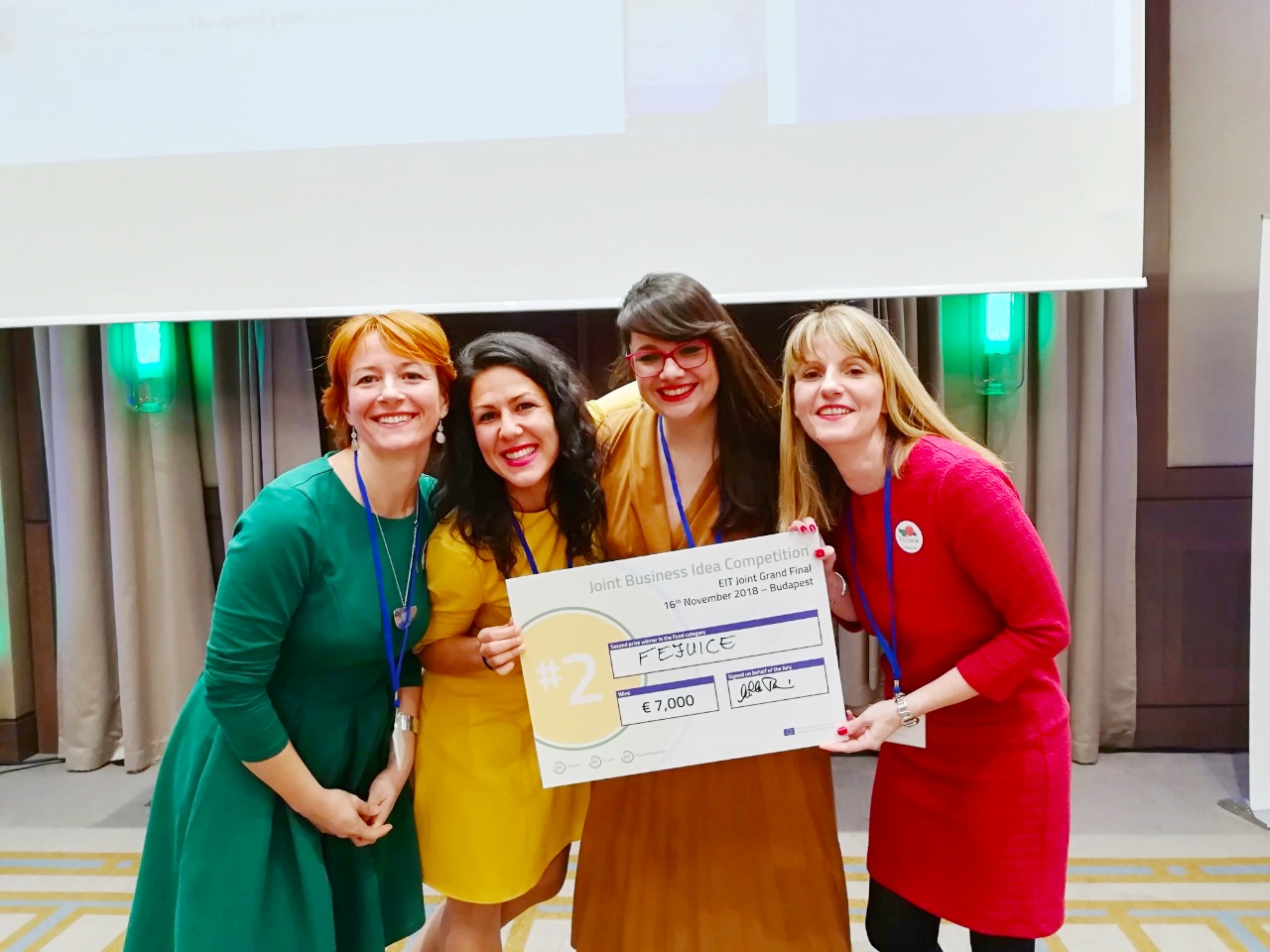
The team of the Faculty of Sciences from Novi Sad, comprising Marija Lesjak, Ivana Beara and Natasa Simin, as well as the entrepreneur Bojana Mumovic Perusko also from Novi Sad, won the second award at the prestigious competition for the best business idea in the food sector organized by the European Institute of Innovation and Technology (EIT).
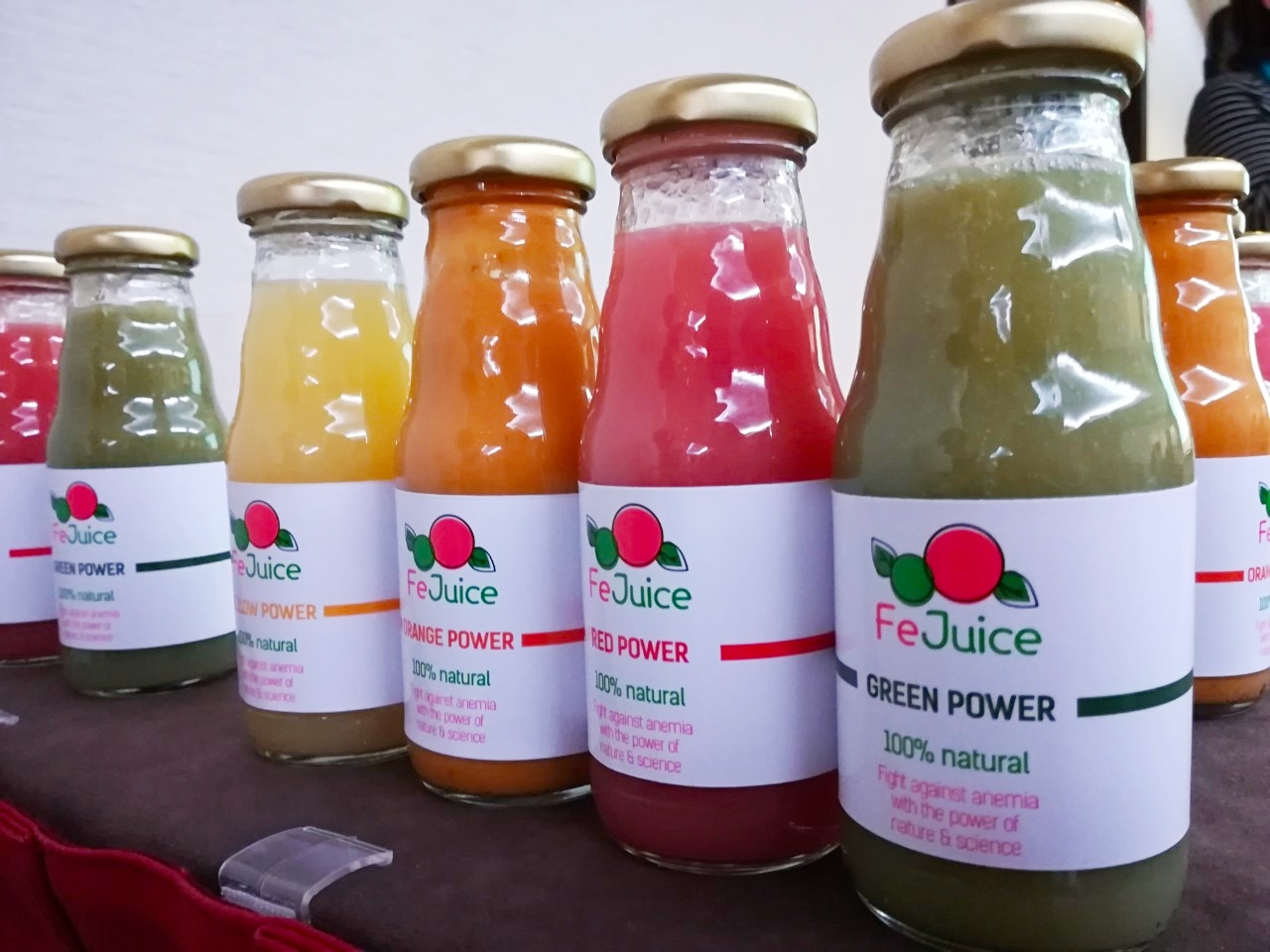
The competition was held on November 16th in Budapest, where, from the initial 75 teams, six best teams competed. The aim of the competition was to present your own innovative business idea in the form of a business plan and a four-minute business pitch to the members of the jury. The team from Novi Sad presented their start-up FeJuice and its innovative product fruit and vegetable juices for the prevention and treatment of anaemia. The idea about FeJuice juices came from the scientific research conducted by the team at the Faculty of Sciences. The jury judged the ideas based on their attractiveness, market demand for the product and team quality and awarded generous prize amounts to the best start-ups as a recognition and an incentive for further development of their business.
VI Congress of the Serbian Genetic Society
- Name of institution organising the scientific meeting: Serbian Genetic Society
- Name of scientific meeting: Serbian Genetic Society
- Location: Vrnjačka Banja
- Date: 13-17 Oct 2019
- Organiser (Chair, Department): Department of Biology and Ecology– co-organiser
- Website link: www.dgsgenetika.org.rs/assets/Uploads/2019DGS-First-Announcement-WEB.pdf
SQAMIA 2019 – 8th Workshop on Software Quality Analysis, Monitoring, Improvement, and Applications
- Name of institution organising the scientific meeting: Faculty of Sciences, Novi Sad
- Name of scientific meeting: SQAMIA 2019 – 8th Workshop on Software Quality Analysis, Monitoring, Improvement, and Applications
- Location: Ohrid, North Macedonia
- Date: 22-25 Sept 2019
- Organiser (Chair, Department): Software Quality Laboratory (SQLab), Department of Mathematics and Informatics
23rd School of Environmental Protection ‘Water Quality’ – Water Workshop
- Name of institution(s) organising the scientific meeting: Faculty of Sciences, Novi Sad; Environmental Protection Association, Novi Sad; Foundation ‘Docent dr Milena Dalmacija’
- Name of scientific meeting: 23rd School of Environmental Protection ‘Water Quality’ – Water Workshop
- Location: Novi Sad
- Date: 18-20 Sept 2019
- Organiser (Chair, Department): Department of Chemistry, Biochemistry and Environmental Protection
CCTH 2019 – Contemporary Trends in Tourism and Hotel Management – Get Ready for the iGeneration
- Name of institution organising the scientific meeting: Faculty of Sciences, Novi Sad
- Name of scientific meeting: CCTH 2019 – Contemporary Trends in Tourism and Hotel Management – Get Ready for the iGeneration
- Location: Novi Sad, the University of Novi Sad Rectorate
- Date: 12-13 Sept 2019
- Organiser (Chair, Department): Department of Geography, Tourism and Hotel Management
The Faculty of Sciences participated as a partner institution in the project financed by the European Commission – the Rearing of Larvae and Adult Diptera (fly) and their Application
A project with an interesting acronym – FLYHIGH and the full title – Insect-plant Relationships: Insights into Biodiversity and New Applications, was the first project of this kind financed at the University of Novi Sad in the period 2015 – 2018. The project gathered researchers, students, laboratory workers and technical staff from the University of Helsinki (Finland), the University of Alicante and the company Bioflytech (Spain), the University of Novi Sad and the company AgriProtein (the Republic of South Africa), who studied the life cycle of insects and plants with the aim of obtaining valuable information in terms of ecology and evolution, which will focus on applied ecological research, such as artificial rearing of flies. Artificial rearing of flies can produce useful end products, because adult members and their larvae can be used in animal feeding, valorisation of agricultural by-products or as bio-agents for pollination services in natural, semi-natural and greenhouse environments.
On the one hand, the project gathered outstanding academic experts in the fields of entomology and ecology, and on the other hand, the experts in mass rearing of insects, which resulted in sharing knowledge and experience and enabled the creation of synergy and advancement in the primary ecological and evolutionary sector, and it also encouraged the development of integrated knowledge and innovative ideas for prospective commercial application in the field of artificial rearing of flies.
In the past few days, a final meeting was held in Alicante, Spain. Young collaborators received training in the field of rearing larval stages of insects which can be used as pollenisers, for organic waste decomposition or for animal or human nutrition. Three young researchers from Serbia (the Faculty of Sciences and the Biosense Institute) underwent the training. It was significant that the project accomplished all that was planned and it also exceeded the plans. In effect, two companies that were involved in the realisation of the project had significantly advanced in the past three years:
- The AgriProtein Company from the Republic of South Africa, Cape Town received an investment of one million dollars and on account to that established its brand which is now being sold in Saudi Arabia, Israel, Korea, Dubai. Two fly factories are made per month, recycling organic waste and producing several different products, with the annual plan to reach 25 on average in each consecutive year.
- The BioFlyTech Company from Spain, Alicante concluded final negotiations about a huge investment in millions which will enable their growth and expansion.
Regarding the scientific institutions participating in the project (the Faculty of Sciences, Novi Sad, Zoological Museum in Helsinki and the Department of the Environmental Sciences from Alicante), their scientific results are really impressive. Numerous scientific publications were issued, and a lot more is to come after the results are obtained. Mass greenhouse production of insects as possible pollenisers could be expected as a follow-up to the research and the obtained results.
In conclusion, these are very impressive results with prospective application in our country.
Curricula Development in the fields of reproductive biology/ assisted reproductive technologies and regenerative medicine in Serbia
Reducing infertility in human population, improving genetic potential in animal husbandry and the conservation of autochthonous species as well as the application of regenerative medicine in the treatment of diseases, all represent the challenges of the modern society.
A team of professors from the Department of Biology and Ecology, the Faculty of Sciences and the Faculty of Medicine, University of Novi Sad are leading a big international project “Curricula Development in the Fields of Reproductive Biology/ Assisted Reproductive Technologies and Regenerative Medicine in Serbia”.
The objectives of this project are the following:
- Modernisation and development of Master Studies in Reproductive Biology in Serbian and English to educate Reproductive Biologists – Embryologists to work in teams for in vitro fertilization, which are jointly carried out by the Faculty of Sciences and the Faculty of Medicine, University of Novi Sad;
- Developing specialization programmes in Animal Reproductive Biotechnology at the Faculty of Veterinary Medicine, University of Belgrade, to educate the veterinarians in the application of assisted reproductive technologies;
- Developing Master Studies in Regenerative Medicine at the Faculty of Medical Sciences, University of Kragujevac.
Тhree European universities participate in the project: Sofia University ‘St. Kliment Ohridski’, Bulgaria, the University of Ljubljana, Slovenia and the University of Newcastle, England, as well as three partners from the SME sector: Special Gynaecological Hospital ‘Ferona’ (Novi Sad, Serbia), Livestock and Veterinary Centre for Reproduction and Artificial Insemination ‘Velika Plana’ (Velika Plana, Serbia), Medical Centre ReproBioMed (Sofia, Bulgaria).
The realization of this project will transfer best practices from the EU universities and enterprises into the higher education institutions in Serbia in the fields of human and animal reproduction and regenerative medicine. The introduction of new study programmes will contribute to the modernization, availability and internalization of university education in Serbia. In October, 2019 these master academic studies will start, which will open up an opportunity for students to choose a new area of expertise, and at the same time this programme will make the studies at the Department of Biology and Ecology and the Faculty of Medicine become more attractive and up-to-date.
It is expected that the first generation of students will complete new study programmes in 2020 and 2021 and become competent and ready to work in the fields of human and animal reproduction as well as regenerative medicine.
Furthermore, in 2019 life-long learning courses for reproductive biologists – embryologists and veterinarians will start. Universities in Serbia, participants in the project, believe that new study programmes will attract more students not only at the national but also at the regional level, since similar study programmes do not exist in the region.