
- Project title: Algebraic, Logical and Combinatorial Methods with Applications in Theoretical Computer Science
- Project number: OI174018
- Institutions participating in the project: Faculty of Sciences (Novi Sad) and Faculty of Economics (Subotica)
- Status in the project: Owner
- Project leader: Petar Marković
- Project type: Fundamental research
- Period of realization: 2011-2019
You are browsing archives for
Author: PMF
Visit of Colleagues From the University of Eastern Finland
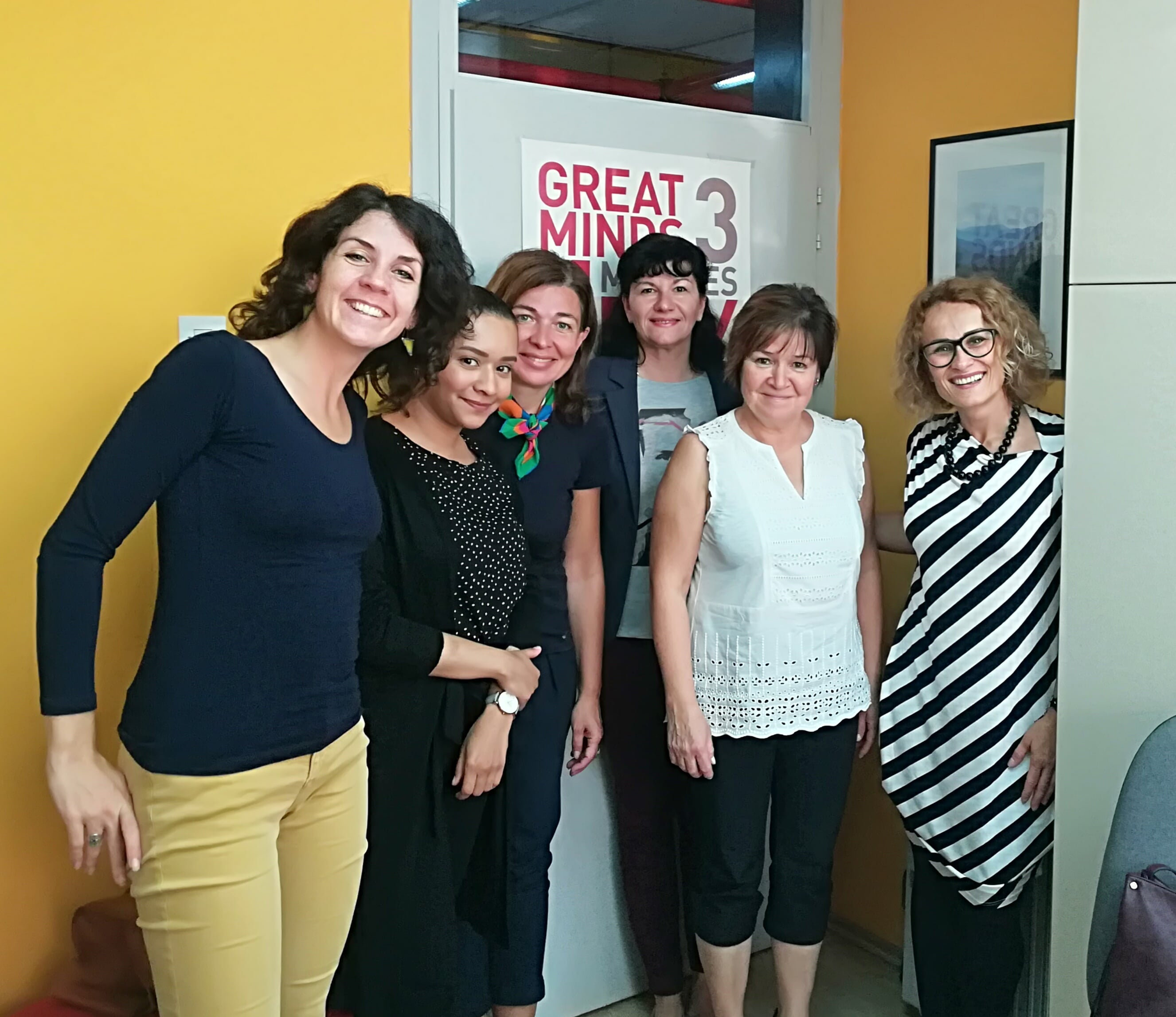 Prof. Dr. Ritva Kantelinen and Zinab Elgundi, PhD student from the School of Applied Educational Science and Teacher Education of the University of Eastern Finland visited the Faculty of Sciences University of Novi Sad from 14th until 18th October 2019. The visit was organized as part of the international cooperation within the Erasmus+ Programme.
The guests were welcomed and hosted by professors Dr. Ljiljana Knezevic, Dragana Vukovic Vojnovic and Stanka Radojcic from the Centre for Languages for Specific Purposes. During the visit Ritva and Zinab gave lectures to local students about the Finish educational system and language education. In addition, the purpose of the visit was to extend and improve the cooperation in the field of foreign language education.
On last day of their visits colleagues from Finland had a meeting with the International Relations Office of the Faculty of Sciences in order to discuss about possibilities to enhance the cooperation and implement further joint activities. Many good ideas have been shared and the new calls for projects were identified. Looking forward to continuation this excellent collaboration with UEF!
Big Data Techniques Yield More Accurate Reconstructions of the Human Face
Winning the 1st place in the Open Innovation Challenge competition
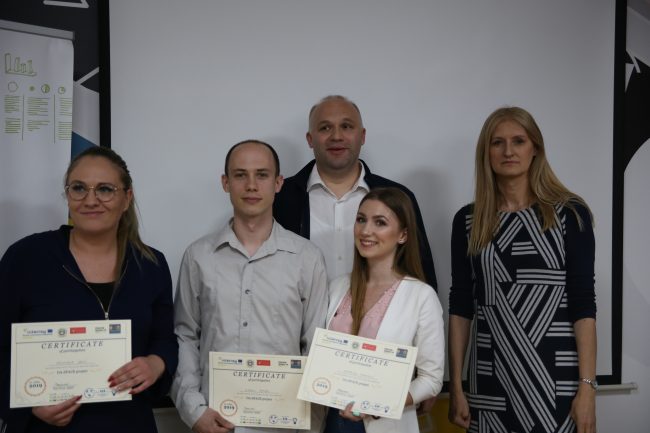 The Demo Day of the Second Cycle of Open Innovations Lab of the DA-SPACE project was held on April 18th in the Business Incubator, Novi Sad.
The winning team, Slaven Tenodi, Kristiana Zrnić and Katarina Avramović, all students at the Department of Chemistry, Biochemistry and Environmental Protection under the mentorship of Nenad Grba, a research associate within the International Interreg Project DA-SPACE, won the 1st place among 9 student teams of the University of Novi Sad in the competition of young teams in solving business challenges – Open Innovation Challenge, and won the place for the international competition to be held in Ulm, Germany from May 13th to May 17th 2019. The topic of the winning team was Water and Energy Efficiency for Better Industry (WE2I).
The competition was organized by the Vojvodina ICT Cluster, University of Novi Sad and the Provincial Secretariat of Finance. The project was supported by the European Union (ERDF, IPA, ENI).
Gastronomy students returned with the awards again
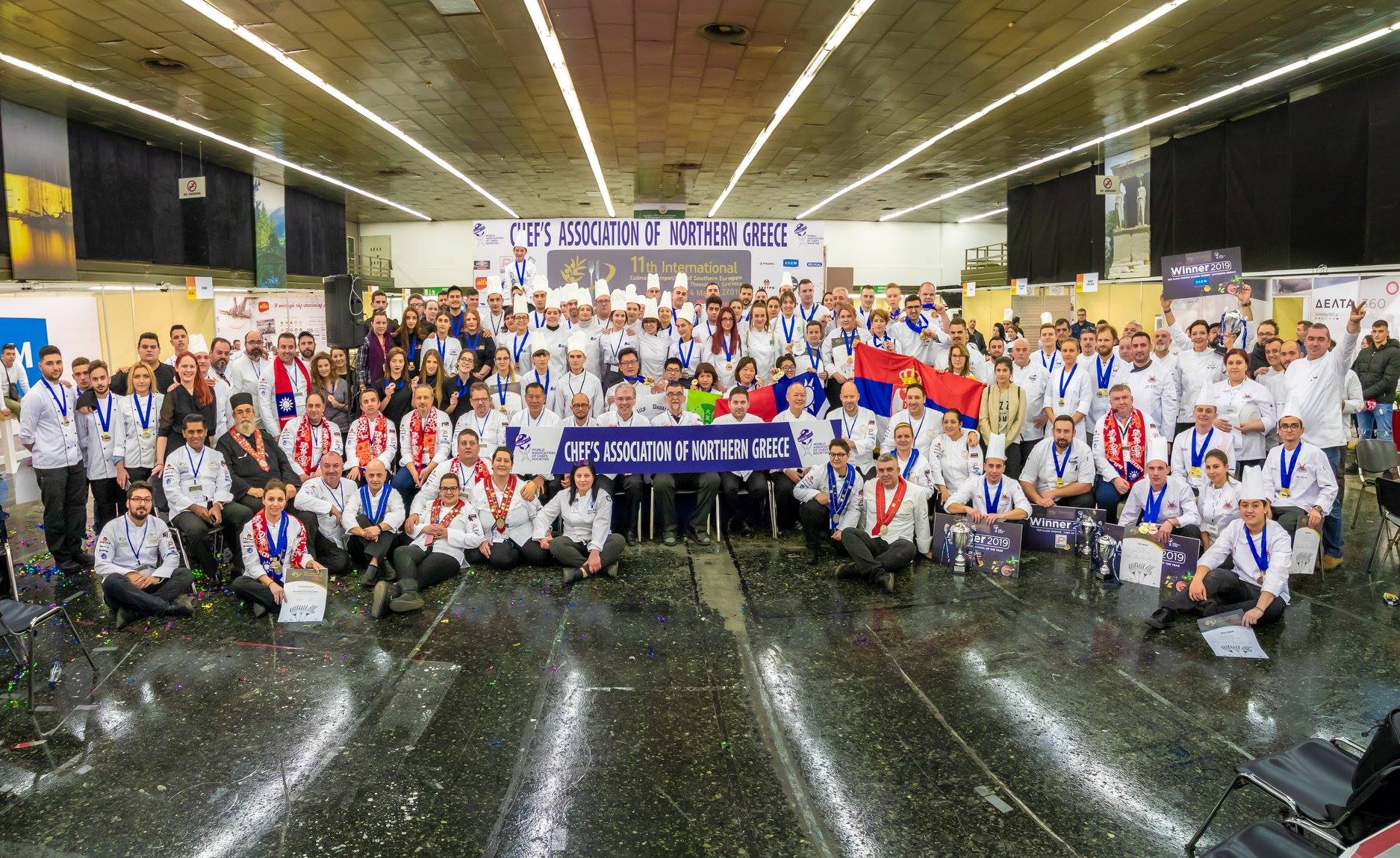
In Thessaloniki, the ‘11th International Culinary Competition of Southern Europe’ was held from March 1st to March 4th as part of the International Tourism Fair, HELEXPO. This is a famous festival which is a part of the calendar of the World Association of Chefs Societies and is organized by the Chefs Association of Northern Greece and the World Association of Chefs Societies (WACS).
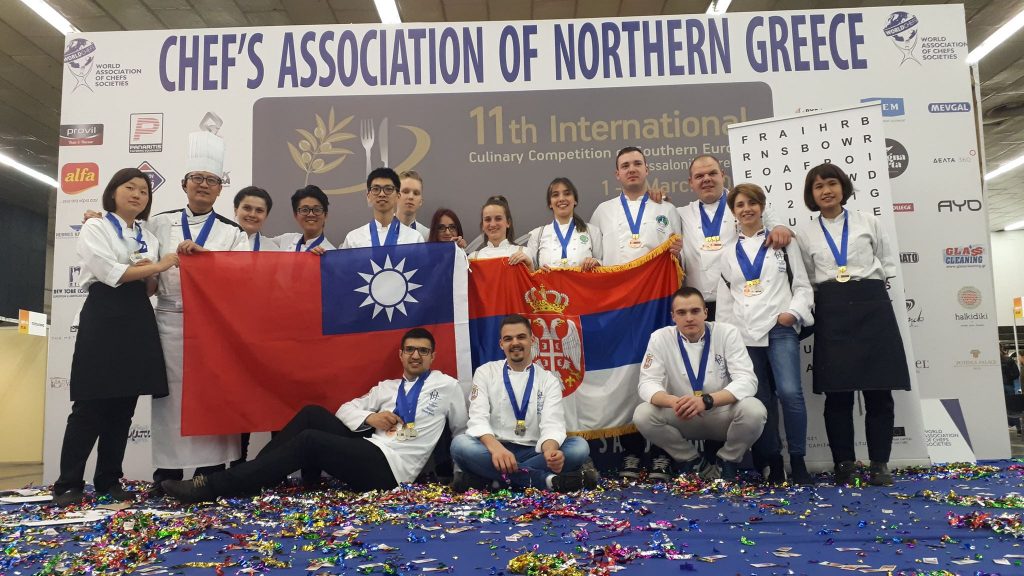 Our team from the Department of Geography, Tourism and Hotel Management, the Faculty of Sciences in Novi Sad, achieved outstanding results – three medals and one certificate of merit. Danica Rinčić won a silver medal in the pasta category, Aleksandra Dimitrijevic won a bronze medal in the risotto category, Miloš Kuzmanović won a bronze medal in the risotto category, and Tatjana Bodvoji won a junior merit award in the vegetarian dish category.
Maja Banjac, Teaching Assistant at the Chair of Gastronomy, won a bronze medal in the senior category – poultry dishes. Maja was the only female contestant in the category, and competed with two national team members and four professional chefs from prestigious catering establishments from Ukraine, Lithuania, Taiwan and Greece.
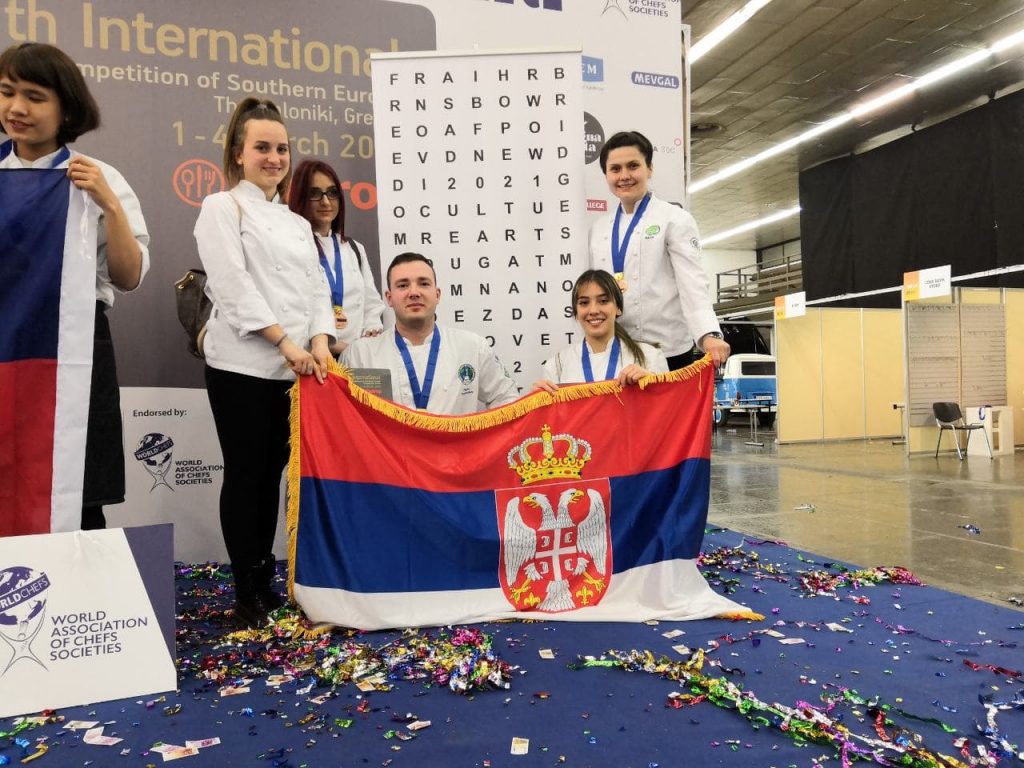 One of our team’s objectives at the competition was to promote authentic food from Vojvodina. The dishes for the competition were prepared in a modern way from local food products: mangulica (Mangalitza) bacon, wine from Fruska Gora, fungi from Fruska Gora, carrots from Begec, cheese from Sombor, wheat, proso millet. Our gastronomy team’s objective to promote local products at this prestigious competition was supported by the Foundation 2021, Novi Sad – European Capital of Culture. Students were mentored by: Goran Radivojevic, Skills Teacher, Dr Bojana Kalenjuk, Assistant Professor and Maja Banjac, Teaching Assistant.
There were over 2,000 contestants from 29 countries at the competition. The judges were renowned, well-known in the world, with the highest judging licences given by the World Association of Chefs Societies (WACS): Roberto Beltramini (Luxembourg), Tony Chang (Taiwan), Victor Orn Andresson (Ireland), Eric Wong (Singapore), Thomas Kuster (Switzerland), Svetlana Riskova (Latvia), Joachim Mueller (Sweden), Nikolas Konstantinou (Cyprus), Nikolaj Crump (Denmark), Georg Wallig (Germany), Marco P. Bruschweiler (Switzerland, Thailand) and Argiro Barbarigou (Greece). On behalf of the World Association of Chefs Societies (WACS), in addition to the mentioned distinguished members, there was the President of WACS Thomas Gugler.
Tourism
- Journal title: Tourism
- ISSN: 1450-6661 (Print) 1821-1127 (Online)
- Publisher: Faculty of Sciences, Department of Geography, Tourism and Hotel Management
- Editor-in-chief: Dr Tatjana Pivac
- Frequency: Quarterly
- Scientific field: Tourism
- Journal category: M53
- Web address: www.dgt.uns.ac.rs/en/homepage/turizam
- E-mail: turizam@dgt.uns.ac.rs
Research Review of the Department of Geography, Tourism and Hotel Management
- Journal title: Research Review of the Department of Geography, Tourism and Hotel Management
- ISSN: 1452-0133 (Print) 2334-7074 (Online)
- Publisher: Faculty of Sciences, Department of Geography, Tourism and Hotel Management
- Editor-in-chief: Dr Branko Ristanović
- Frequency: Biannual
- Scientific field: Geography, Tourism
- Journal category: M53
- Web address: www.dgt.uns.ac.rs/en/homepage/zbornik-radova/
- E-mail: zbornik@dgt.uns.ac.rs
NSJOM (Novi Sad Journal of Mathematics)
- Journal title: NSJOM (Novi Sad Journal of Mathematics)
- ISSN: 1450-5444 (Print) 2406-2014 (Online)
- Publisher: Faculty of Sciences, Department of Mathematics and Informatics
- Editor-in-chief: Dr Stevan Pilipović
- Frequency: Biannual
- Scientific field: Mathematics and Theoretical Informatics
- Journal category: M51
- Web address: https://sites.dmi.uns.ac.rs/nsjom
- E-mail: nsjom@dmi.uns.ac.rs
Geographica Pannonica
- Journal title: Geographica Pannonica
- ISSN: 0354-8724
- Publisher: Faculty of Sciences, Department of Geography, Tourism and Hotel Management
- Editor-in-chief: Dr Lazar Lazić
- Frequency: Quarterly
- Scientific field: Geography, Ecology, Tourism
- Journal category: M24
- Web address: www.dgt.uns.ac.rs/en/homepage/pannonica
- E-mail: gpscijournal@gmail.com
Computer Science and Information Systems
- Journal title: Computer Science and Information Systems
- ISSN: 1820-0214 (Print) 2406-1018 (Online)
- Publisher: ComSIS Consortium
- Editor-in-chief: Dr Mirjana Ivanović
- Frequency: Quarterly
- Scientific field: Informatics
- Journal category: M23
- Web address: www.comsis.org
- E-mail: comsis@uns.ac.rs