GENERA‑COPA Project Receives Funding to Promote Gender and Diversity in STEM

European initiative awarded Erasmus+ funding to transform STEM education through gender and diversity integration, launched at the GENERA General Assembly in Limerick.

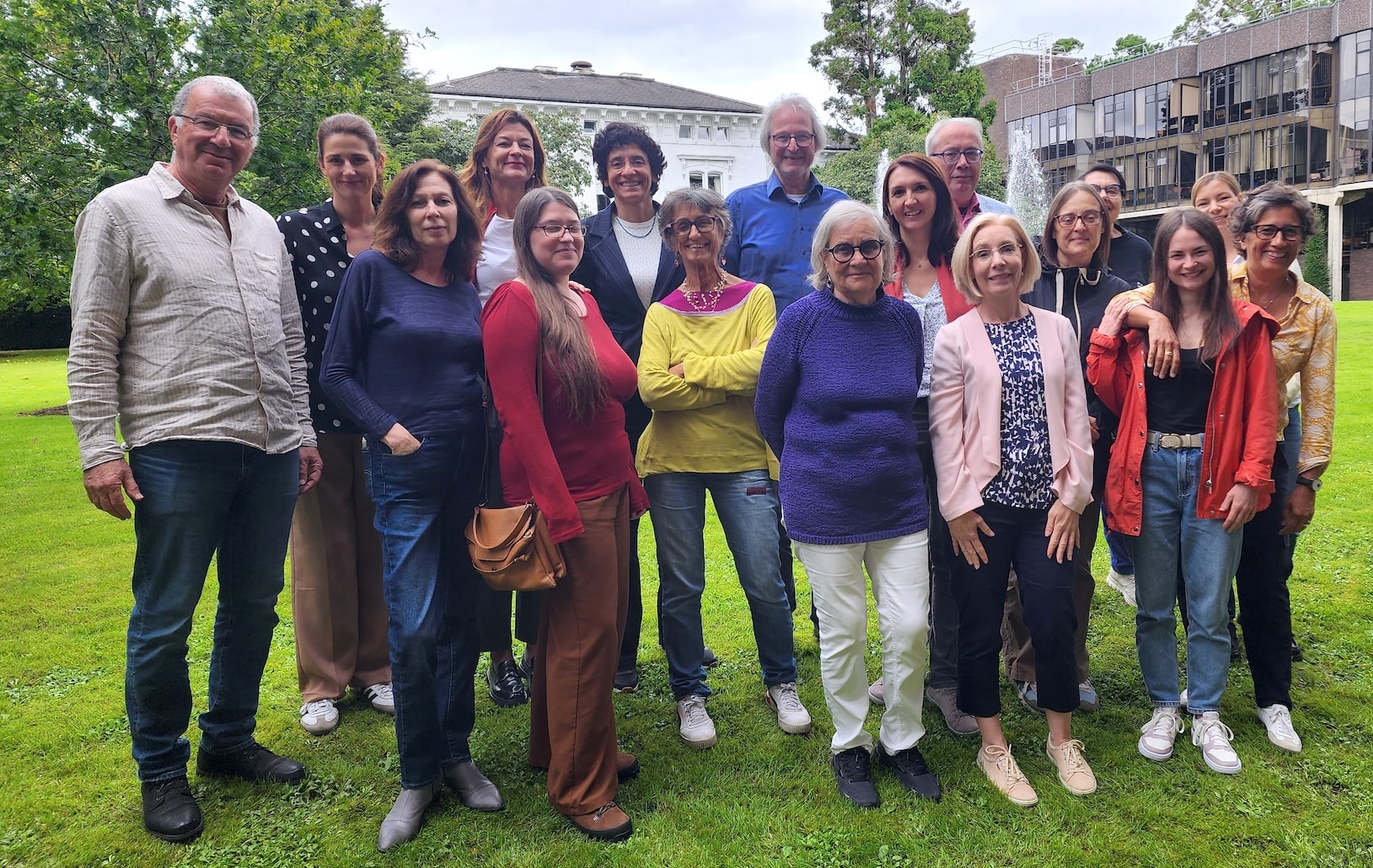
With the main aim to address the critical challenge of attracting and retaining minoritized groups in science and research, the GENERA‑COPA project has been selected as one of only 25 projects funded out of 124 proposals in the latest Erasmus+ call, receiving €400,000 to implement innovative activities that promote gender and diversity in math-intensive STEM fields. GENERA-COPA arose from collaboration within the GENERA Network and was officially kicked off during the General Assembly of this network held beginning of September 2025 at the University of Limerick (event details).

The project seeks to transform higher education curricula and institutional culture by integrating gender and diversity perspectives. By building university and research capacity and training local “critical friends” as trainers across Europe, the project ensures the sustainability of its initiatives and long-term transformation of educational practices. With this funding, GENERA‑COPA is poised to make a significant contribution to the European STEM landscape, promoting equality, diversity, and inclusion across higher education institutions.

The project focuses on the integration of a gender and diversity perspective in the math-intensive STEM fields, which has been suggested by L. Schiebinger (1999, Has Feminism changed Science, Cambridge, MA: Harvard Univ. Press.) as a major strategic approach to implement gender equality and diversity in addition to improving the number of women in STEM and the culture of research as it is performed in research institutions in STEM.

Increasing internationality, interdisciplinarity and working in larger and more diverse groups place new demands on young scientists. Within the project an introductory course will be developed, tested and implemented with the intention of preparing students and young scientists for these new requirements. This is not yet part of university education, however, urgently needed to perform research successfully and efficiently, contribute to a more inclusive higher education system and improve the job opportunities of young researchers.

The existing learning culture will be investigated and further develop with new approaches in inclusive teaching and learning, including universal design and STEAM education in the math-intensive STEM fields. Particular attention should be paid to how to best use online Learning Management Systems (LMS), Self Learning, and Train-the-Trainer methods.

Furthermore, the project will work in the direction of improving the direct support of master and PhD students in building up a successful career. In current institutional gender equality and diversity plans mentoring is one of the preferred measures to improve existing inequalities. Existing mentoring programs will be examined and methods developed to increase their effectiveness in terms of equality, diversity and inclusion. Innovative forms of mentoring will be developed and tested that couple mentoring with networking and active sponsoring to offer an early introduction to international cooperation in science that is difficult to convey through participation in courses.

The project targets internal audiences, including partners, staff, and associated collaborators. The primary external audience includes higher education teachers, early-stage STEM researchers, mentors and mentees, diversity and inclusion officers, and math field intensive departments and institutions. Secondary audiences comprise policymakers, science communication organizations, advocacy groups for women and minoritized groups in STEM, and the general public interested in equality and STEM.

Through these activities, GENERA‑COPA aims to support institutions in introducing gender and diversity perspectives into curricula, enhance their capacity for inclusive education, and embed trained trainers to sustain ongoing development. As part of the GENERA Network, the consortium brings together extensive expertise and experience in applying gender perspectives and promoting equality, diversity, and inclusion within math-intensive STEM disciplines.

The project involves multiple European universities and research institutions collaborating for 3 years to create a more inclusive and equitable learning environment; it is coordinated by the German research centre DESY, further partner organisations are the Italian National Institute for Astrophysics (INAF), the Italian National Institute for Nuclear Physics (INFN), Weizmann Institute of Science (Israel), University of Limerick (Ireland), University of L’Aquila (Italy), Vilnius University (Lithuania), University of Novi Sad (Serbia), University of Alcalá and University of Oviedo (both Spain), Lund University (Sweden), and the Swiss Physical Society.

For more information:
📌 Website: https://www.genera-copa.eu
📌 Contact: chiara.badia@inaf.it

Erasmus+ Blended Intensive Programme: Internet of Things and 3D Printing – III edition

The University of Novi Sad is organising the Erasmus+ Blended Intensive Programme (BIP) Internet of Things and 3D Printing, 3rd edition, within the project 2024-1-RS01-KA131-HED-000195876, in cooperation with the University of Porto and partner universities across Europe.

The programme consists of:

  • a virtual component: 13 April – 15 May 2026
  • a physical component in Novi Sad: 18–22 May 2026

The BIP is open to students from EU Member States and Erasmus+ associated countries who are interested in the Internet of Things (IoT) and 3D printing and who possess basic computer and/or programming skills, as well as to academic and administrative staff involved in teaching or supporting these fields.

During the programme, participants will gain theoretical and practical knowledge in IoT technologies (Arduino, ESP32, sensors, data processing and storage, cloud services), C++ programming, as well as 3D design and 3D printing, through laboratory work, workshops, and study visits.

The expected number of participants is 20–25 students, and the programme awards 3 ECTS credits.

The deadline for nomination of candidates by their home institutions is 30 January 2026.

For more information and nominations, please contact: IoT.bip@uns.ac.rs

Mainstreaming water reuse into the circular economy paradigm (Water4Reuse)

Successful Erasmus + traineeship at the Faculty of Sciences

During the past few months, the Faculty of Sciences, University of Novi Sad, hosted an internship student from Turkey (İzmir Institute of Technology), Dilan İrem Açan. As part of the Erasmus+ program, she had the opportunity to engage in research activities and to further develop her knowledge and skills under the mentorship of Srđana Đorđievski, research associate at the Department of Biology and Ecology.

During her internship, Dilan worked on the topic “Exploring the environmental and biological factors influencing the health and longevity of honey bee”, gaining valuable experience in the field of biology and environmental protection, as well as in an international research environment.

“My time at the University of Novi Sad has been one of the most valuable experiences in my life. During my internship, I not only improved my scientific and laboratory skills but also learned the true value of teamwork, cultural exchange, and friendship. Living and working in such an inspiring environment helped me grow both as a researcher and as a person. I am truly grateful for this opportunity and for all the support I received. This experience will always remain a special part of my academic and personal journey.” – said Dilan.

The stay of international students within the Erasmus+ program is an important part of the international cooperation of our Faculty, and experiences like this confirm the significance of openness, exchange, and shared learning in international circles.

We wish our colleague Dilan much success in her future personal and academic endeavors.

Integrate gender, diversity and inclusion in teaching and research in the math-intensive STEM fields (GENERA-COPA)

  • Project title: Integrate gender, diversity and inclusion in teaching and research in the math-intensive STEM fields (GENERA-COPA)
  • Project number: 2025-1-DE01-KA220-HED-000363507
  • Institutions participating in the project: Deutsches Elektronen-Synchrotron – DESY (Germany), University of Novi Sad Faculty of Sciences (Serbia), Universidad de Oviedo (Spain), Lund University (Sweden), University of Limerick (Ireland), Universidad de Alcalá (Spain), Vilnius University (Lithuania), National Institute for Astrophysics – INAF (Italy), National Institute for Nuclear Physics – INFN (Italy), Weizmann Institute of Science (Israel), University of L’Aquila (Italy), Swiss Physical Society (Switzerland)
  • Status in the project: Partner (Faculty of Sciences, Department of Physics, leader: Milica Pavkov Hrvojević)
  • Project leader: Stiftung Deutsches Elektronen-Synchrotron DESY (Germany)
  • Project type: Erasmus+ Call: 2025 2025-1-DE01-KA220-HED; Type of action: Cooperation Partnership
  • Period of realization: 2025-2028 (1.9.2025-31.8.2028)
  • Project website: https://www.genera-copa.eu

ENLIGHT – The International Conference on Light Pollution and Dark Sky Protection

  • Name of institution(s) organising the scientific meeting: Institute for Biological Research “Siniša Stanković”, Faculty of Sciences (Novi Sad), Science Fund of the Republic of Serbia
  • Name of scientific meeting: ENLIGHT – The International Conference on Light Pollution and Dark Sky Protection
  • Location: Faculty of Sciences Novi Sad
  • Date: 28 – 30 Nov 2025
  • Organiser (Chair, Department): Department of Biology and Ecology, Faculty of Sciences, Novi Sad
  • Website link: https://www.enlightproject.rs/enlight-conference

Trustworthy Unified Robust Intelligent Generative Systems

  • Project title: Trustworthy Unified Robust Intelligent Generative Systems
  • Project number: 10121503
  • Institutions participating in the project: https://pandora-heu.eu/consortium/
  • Status in the project: Partner
  • Project coordinator for UNSPMF team: Dušan Jakovetić (Department of Mathematics and Informatics)
  • Project type: HORIZON-CL4-2024-HUMAN-03, Type of action: HORIZON Research and Innovation Actions (RIA)
  • Period of realization: 1.9.2025-31.8.2028
  • Project website: https://cordis.europa.eu/project/id/101215032
 
Све уплате на садашњи рачун Факултета могу се извршити закључно са понедељком, 29.12.2025. године, до 17:00 часова. За уплате извршене након тог термина, постоји могућност да неће бити евидентиране, а евентуални повраћај средстава тада неће бити могућ. Због увођења Система за припрему, извршење, рачуноводство и извештавање (СПИРИ), почетком јануара 2026. године биће отворени нови рачуни преко којих ће се вршити уплате. Сва обавештења биће објављена на овој страници и на друштвеним мрежама, и биће послата кроз платформу Moodle свим студентима.