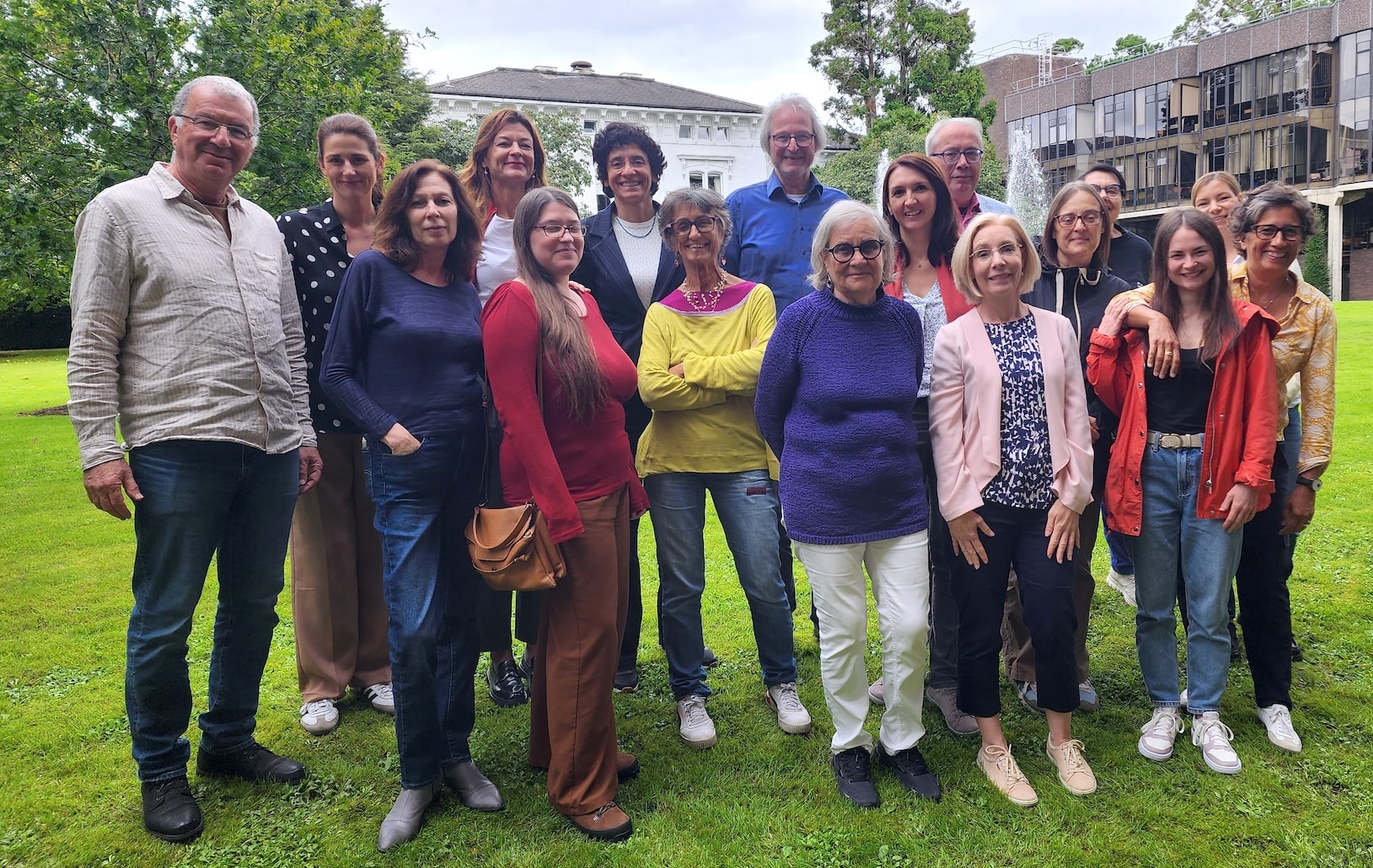
European initiative awarded Erasmus+ funding to transform STEM education through gender and diversity integration, launched at the GENERA General Assembly in Limerick.
With the main aim to address the critical challenge of attracting and retaining minoritized groups in science and research, the GENERA‑COPA project has been selected as one of only 25 projects funded out of 124 proposals in the latest Erasmus+ call, receiving €400,000 to implement innovative activities that promote gender and diversity in math-intensive STEM fields. GENERA-COPA arose from collaboration within the GENERA Network and was officially kicked off during the General Assembly of this network held beginning of September 2025 at the University of Limerick (event details).
The project seeks to transform higher education curricula and institutional culture by integrating gender and diversity perspectives. By building university and research capacity and training local “critical friends” as trainers across Europe, the project ensures the sustainability of its initiatives and long-term transformation of educational practices. With this funding, GENERA‑COPA is poised to make a significant contribution to the European STEM landscape, promoting equality, diversity, and inclusion across higher education institutions.
The project focuses on the integration of a gender and diversity perspective in the math-intensive STEM fields, which has been suggested by L. Schiebinger (1999, Has Feminism changed Science, Cambridge, MA: Harvard Univ. Press.) as a major strategic approach to implement gender equality and diversity in addition to improving the number of women in STEM and the culture of research as it is performed in research institutions in STEM.
Increasing internationality, interdisciplinarity and working in larger and more diverse groups place new demands on young scientists. Within the project an introductory course will be developed, tested and implemented with the intention of preparing students and young scientists for these new requirements. This is not yet part of university education, however, urgently needed to perform research successfully and efficiently, contribute to a more inclusive higher education system and improve the job opportunities of young researchers.
The existing learning culture will be investigated and further develop with new approaches in inclusive teaching and learning, including universal design and STEAM education in the math-intensive STEM fields. Particular attention should be paid to how to best use online Learning Management Systems (LMS), Self Learning, and Train-the-Trainer methods.
Furthermore, the project will work in the direction of improving the direct support of master and PhD students in building up a successful career. In current institutional gender equality and diversity plans mentoring is one of the preferred measures to improve existing inequalities. Existing mentoring programs will be examined and methods developed to increase their effectiveness in terms of equality, diversity and inclusion. Innovative forms of mentoring will be developed and tested that couple mentoring with networking and active sponsoring to offer an early introduction to international cooperation in science that is difficult to convey through participation in courses.
The project targets internal audiences, including partners, staff, and associated collaborators. The primary external audience includes higher education teachers, early-stage STEM researchers, mentors and mentees, diversity and inclusion officers, and math field intensive departments and institutions. Secondary audiences comprise policymakers, science communication organizations, advocacy groups for women and minoritized groups in STEM, and the general public interested in equality and STEM.
Through these activities, GENERA‑COPA aims to support institutions in introducing gender and diversity perspectives into curricula, enhance their capacity for inclusive education, and embed trained trainers to sustain ongoing development. As part of the GENERA Network, the consortium brings together extensive expertise and experience in applying gender perspectives and promoting equality, diversity, and inclusion within math-intensive STEM disciplines.
The project involves multiple European universities and research institutions collaborating for 3 years to create a more inclusive and equitable learning environment; it is coordinated by the German research centre DESY, further partner organisations are the Italian National Institute for Astrophysics (INAF), the Italian National Institute for Nuclear Physics (INFN), Weizmann Institute of Science (Israel), University of Limerick (Ireland), University of L’Aquila (Italy), Vilnius University (Lithuania), University of Novi Sad (Serbia), University of Alcalá and University of Oviedo (both Spain), Lund University (Sweden), and the Swiss Physical Society.
For more information:
📌 Website: https://www.genera-copa.eu
📌 Contact: chiara.badia@inaf.it